
Obby Keyboard ASMR Runner
Evkar gamesArcade
4.013.00 Reviews
- Version
- 1.1.5
- Installs
- 100.00K
- Age Rating
- Teen
Screenshots
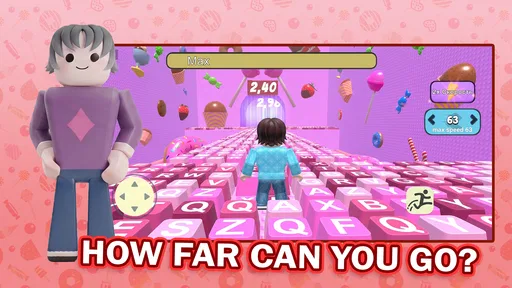
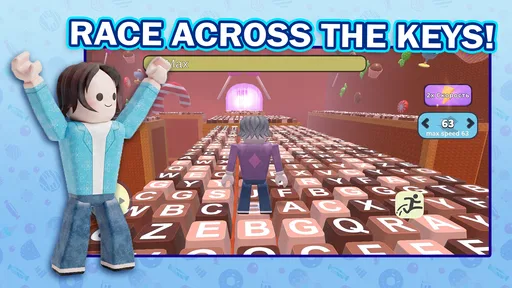
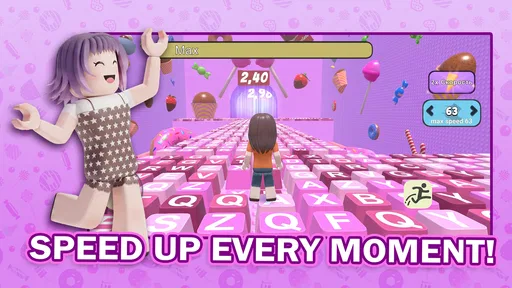

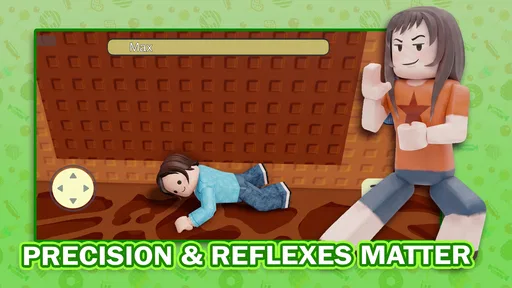
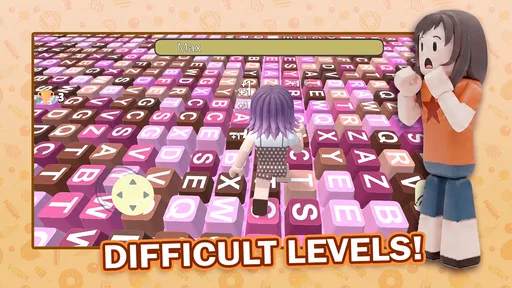
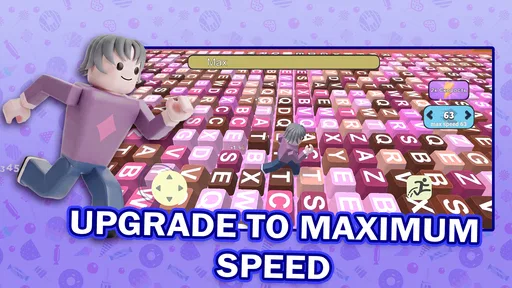
Our Review of Obby Keyboard ASMR Runner
 Analysis by Appyee
I approached Obby Keyboard ASMR Runner as a quick arcade game rather than a long-form adventure. Its central appeal is easy to understand: guide a keyboard-themed runner through obstacle-course stages, build progress, move faster, and avoid traps and bosses. That combination gives it a playful rhythm, but it also means the game depends heavily on responsive controls and readable hazards. If either feels off, even a short run can become frustrating.
Created by Evkar games, this free title sits in the arcade section and is aimed at Teen players. It has attracted over one hundred thousand installs and holds a 4.0 average from around nine hundred ratings, which suggests a reasonably established audience without presenting it as a universal favorite. I found the concept most appealing when I wanted something immediate: a game I could open, understand quickly, and play in short bursts without first learning a complicated story or control system.
How the running pace feels in ordinary play
The first thing I noticed is that the sense of speed is tied to decision-making more than to long sessions. The runner’s increasing pace makes familiar-looking sections feel less forgiving, so the real challenge is staying attentive as the course becomes more demanding. The keyboard theme gives the game a distinctive identity, while the ASMR angle suggests that the tactile and audio feel of movement is part of the attraction rather than a minor decoration.
I would not approach this as a traditional endless runner where the only goal is to survive for as long as possible. The level-based obby structure gives each attempt a more focused purpose. I found myself thinking about the next trap, the safest line through a crowded section, and the point at which rushing became less useful than waiting for a clear opening. That makes the game feel closer to an obstacle-course challenge than to a purely reflex-based sprint.
Progression also changes how I judge speed. Leveling up and running faster can feel rewarding, but faster movement is not automatically better if it reduces the time available to recognize a boss or trap. My practical advice is to treat every speed increase as a new control problem. Instead of immediately trying to play aggressively, I would first learn how much visual space is available before an obstacle and whether a safer route exists.
A useful everyday scenario is a short break between tasks. I could play a few attempts while waiting for an appointment or during a commute, provided I was somewhere I could concentrate on the screen. The game’s basic premise is quick to grasp, so it does not demand the kind of uninterrupted attention that a story-heavy role-playing game needs. However, the faster sections are not ideal when I am distracted, walking, or trying to split attention between the game and another activity.
Where the pace becomes demanding
Traps and bosses create different kinds of pressure. A trap tests recognition and timing, while a boss encounter can make the run feel more like a deliberate challenge than a simple sequence of jumps or dodges. I appreciated that distinction because it prevents every obstacle from blending into the same reaction. At the same time, players who prefer calm, predictable arcade games may find the acceleration and sudden danger less relaxing than the ASMR presentation implies.
The most effective way to handle a difficult stretch is to stop treating each failure as a speed contest. I would use early attempts to identify the visual warning for a hazard, then focus on reproducing the same movement rather than improvising at the last instant. This is a small but important shift: the game rewards pattern recognition, not just fast fingers. It also makes progress feel more earned when a section finally becomes consistent.
That approach exposes one limitation. A player looking for deep character development, exploration, or a substantial narrative will probably find the experience narrow. The appeal is concentrated in movement, obstacles, and progression. Compared with a conventional platform game, it offers less room for wandering and discovery; compared with a basic endless runner, it appears more structured around individual obstacle-course situations.
What happens during heavier play sessions
In short sessions, the game’s design works best when I keep my expectations modest. The concept is built for repeated attempts, so a failed run is not necessarily a sign that something went wrong technically. Often, the obstacle simply exposed a timing mistake. That distinction matters because arcade games can feel unstable when the real issue is that the player has not yet learned the course.
Longer play changes the experience. Repeating the same type of movement can become mentally tiring, especially when the runner is moving faster and every mistake sends me back into another attempt. I recommend taking a pause after several failed runs instead of forcing progress. A brief reset helps me notice whether I am reacting too early, holding a direction too long, or entering an obstacle with the wrong pace.
The game’s free entry is helpful here because I can test that loop without paying upfront. There are in-app purchases ranging from ninety-nine cents to six dollars and ninety-nine cents per item, so I would be careful about spending simply to overcome impatience. For me, the better test is whether the core running and dodging remain enjoyable without treating purchases as a requirement. Anyone who dislikes optional spending in free games should review the purchase flow carefully before handing the phone to a child.
Another practical point is screen attention. Keyboard-themed movement can look simple, but a fast obstacle course leaves little room for imprecise taps or casual glances. I would use a stable grip and avoid playing while the phone is nearly out of battery or surrounded by notifications. Those are not special requirements of the game so much as sensible precautions for any title where a momentary interruption can ruin a run.
Recovery after a mistake
Recovery is an important part of how I evaluate this kind of game. When I miss a trap, I want the next attempt to feel understandable rather than mysterious. The level-based format helps because I can focus on improving a particular challenge instead of feeling that a long, random run has been wasted. That gives the game a more approachable learning curve than some endless runners, where a single mistake can erase a long sequence and offer little insight into what to change.
Still, recovery is not the same as convenience. Repeating a difficult section can be satisfying for players who enjoy mastery, but it may feel repetitive to someone who wants constant novelty. I would recommend it to people who like trying the same obstacle several times with a slightly better plan. I would skip it if I usually stop playing a game as soon as it asks me to repeat a failed pattern.
One technique I found useful is to divide a run into visual checkpoints in my head. I do not mean formal save points; I mean remembering the order of hazards and the moment when my attention needs to shift. This turns a chaotic sequence into a small routine. It is especially helpful when speed increases, because I can prepare for the next danger instead of reacting to the entire screen at once.
Stability, device limits, and practical expectations
The current version is 1.1.5, and the game supports devices running Android 7.0 or later. That broad operating-system requirement makes it accessible to many older Android users, but compatibility alone does not guarantee an identical experience on every phone. Screen response, available resources, and background activity can all affect how comfortable a fast arcade game feels.
I would not describe it as a title that should automatically demand premium hardware. Its arcade presentation and focused obstacle-course format suggest a lighter everyday use case than a large open-world game. Even so, players on older or heavily occupied devices should keep expectations realistic. If the phone is already struggling with other apps, closing unused tasks and avoiding simultaneous downloads is a sensible way to reduce possible interruptions.
Resource demands are also about battery and attention, not only graphics. Repeated attempts can encourage longer sessions than expected, especially when I am close to clearing a difficult section. If battery life matters, shorter play periods are the safer habit. I would also avoid judging the game’s responsiveness while the device is hot, charging under heavy load, or dealing with a poor touch response caused by a damaged screen protector.
For a younger player, the Teen content rating is worth considering before installation. The rating does not tell me whether the game matches every family’s preferences, so I would still watch how the player responds to the obstacle and boss encounters and discuss in-app purchases in advance. The free download makes trying it easy, but the presence of paid items means it should not be treated as completely cost-free in every situation.
Who will enjoy it, and who should choose something else
I think the best audience is someone who enjoys compact arcade challenges, visual timing, and gradual improvement. It suits players who like an obby-style structure but want a more unusual keyboard theme than the usual jumping-course presentation. It is also a reasonable choice for someone who wants a free game for short breaks and does not need a detailed story to stay interested.
I would be less likely to recommend it to players who want relaxed controls, extensive customization, or a clear competitive ranking system. I would also point fans of traditional platformers toward a game with more deliberate jumping and exploration if that is what they value most. Compared with an endless runner, this one is more appealing when I want recognizable obstacle-course goals; compared with a full platform adventure, it is better when I want a compact loop that returns quickly to movement.
Players sensitive to repetitive attempts should try it cautiously. The same quality that makes improvement satisfying can make the game feel narrow after the novelty of the keyboard theme fades. My suggestion is to judge it by the first several play sessions rather than by the store summary alone: if learning a trap feels rewarding, the design may hold your attention; if repetition already feels like a chore, a more varied arcade game will probably be a better fit.
My performance verdict after using it
My overall impression is that Obby Keyboard ASMR Runner works best as a focused, pick-up-and-play arcade title. Its strongest qualities are the recognizable keyboard identity, the clear emphasis on dodging, and the way increased speed turns simple-looking courses into timing exercises. The 4.0 average and growing install base make it easy to see why it has found an audience, but those figures do not replace personal preference: this is a game built around repetition and reaction, not broad variety.
From a performance perspective, I would keep expectations balanced. The game appears suited to ordinary Android play, and the Android 7.0 minimum makes it available to a wide range of devices. However, a fast runner is unforgiving of touch delay, interruptions, or poor device conditions. If a run feels strangely difficult, I would first check grip, notifications, heat, and background activity before blaming the level design.
The most important trade-off is between speed and control. Leveling up can make progress feel exciting, yet it also reduces the time available to process hazards. I recommend learning routes patiently, using short sessions, and treating purchases as optional rather than as a shortcut to enjoyment. Those habits make the game easier to evaluate fairly and help separate genuine skill improvement from frustration-driven spending.
I would recommend it to a friend who likes obstacle courses, quick arcade attempts, and the satisfaction of mastering a troublesome sequence. I would not recommend it to someone searching for a deep adventure, a low-pressure sensory experience, or a game that stays fresh without repeated practice. For the right player, the best reason to try it is the feeling of turning a chaotic fast run into a controlled routine. It is free to start, distinctive enough to stand apart from a generic runner, and most enjoyable when approached as a small timing challenge rather than as a complete all-purpose game.
Verdict
Strengths of Obby Keyboard ASMR Runner
- Satisfying keyboard-themed ASMR sounds make simple runs feel more engaging.
- Short levels are convenient for quick play sessions on mobile.
- Colorful obstacle designs are easy to recognize while running.
- Simple controls make it accessible for casual players of all ages.
- Progression encourages replaying levels to improve timing and scores.
Limitations of Obby Keyboard ASMR Runner
- Repetitive gameplay may become predictable after extended play.
- Precise obstacle timing can feel frustrating on smaller screens.
- Some levels offer limited variety beyond the core running mechanic.
- Sound effects may be distracting in public or quiet environments.
- Performance and loading can vary across older Android and iOS devices.
Similar Picks in This Category
View All
Subway Surfers
SYBO Games4.6

Stickman Party 234 MiniGames
PlayMax Game Studio4.6

Subway Princess Runner
Ivy4.4

Temple Run
Imangi Studios4.2

Zombie Tsunami
Mobigame SAS4.6

Stack Ball - Crash Platforms
CASUAL AZUR GAMES4.5
Frequently Asked Questions
What is Obby Keyboard ASMR Runner?
Obby Keyboard ASMR Runner is a casual obstacle-course game that combines fast running challenges with keyboard-themed ASMR interactions. You guide a character through colorful tracks, avoid hazards, collect useful items, and try to reach the finish line without making mistakes. Its appeal comes from simple controls, short levels, satisfying sounds, and progressively more demanding courses suitable for quick gaming sessions.
How do you play Obby Keyboard ASMR Runner?
Gameplay is designed to be easy to understand, even for players who are new to obstacle or runner games. You generally control the character by tapping, swiping, or using on-screen movement controls, depending on the level and device. Timing is important because platforms, gaps, traps, and moving obstacles require careful reactions. Completing stages successfully lets you continue to more challenging courses.
Is Obby Keyboard ASMR Runner suitable for children?
The game uses bright visuals, straightforward objectives, and non-violent obstacle-course gameplay, which may make it appealing to younger players. However, parents should still check the store listing, age rating, advertising content, and any available in-app purchase options before allowing children to play. Some versions may also include third-party ads or features that require supervision.
Does Obby Keyboard ASMR Runner require an internet connection?
The basic running and obstacle gameplay may work without a constant internet connection, but the exact offline experience can depend on the version installed and the developer’s implementation. Internet access may still be needed for advertisements, analytics, updates, online rewards, or restoring purchases. Before traveling or playing offline, it is best to launch the game once and test the available features.
Are there ads or in-app purchases in Obby Keyboard ASMR Runner?
Many free mobile games in this category are supported by advertising and may offer optional purchases, such as removing ads, unlocking cosmetic items, or obtaining additional rewards. The availability and pricing can vary between Android and iOS versions and may change after updates. Review the official store page and your device’s purchase settings before downloading, especially if children use the device.
Play our best games!


